Produktbeschreibung:
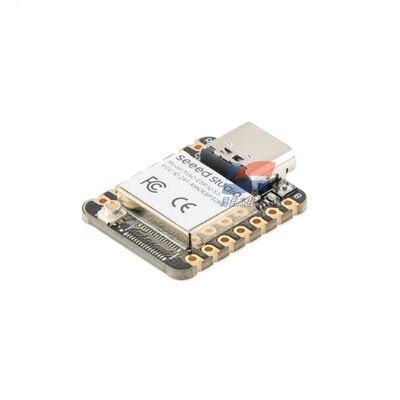
YJJ XIAO-ESP32-S3 Sense Plus Dual-Core 32-Bit Xtensa LX7 Prozessor Development Board Modul
Merkmale:
XIAO ESP32-S3 Sense (AI Vision Edition)
Zusätzlich zur Standardversion enthält es:
OV2640-Kamera (1600×1200), unterstützt Gesichts-/Bilderkennung
Eingebautes digitales Mikrofon zur Spracherfassung
Reservierter SD-Kartensteckplatz für lokale Bild- und Audiospeicherung
Geeignet für KI-Vision-, Spracherkennungs-, Überwachungs- und Bilderfassungsprojekte. Gesätes Gestüt...
II. Kernhardwareparameter
Hauptsteuerchip: ESP32-S3R8
Dual-Core Xtensa LX7, mit einer Hauptfrequenz von 240 MHz, integriertem AI-Vektorbeschleunigungsbefehlssatz (NPU)
Integriertes 2,4-G-WLAN + BLE 5.0, unterstützt Bluetooth Mesh Storage
Standardversion: 8 MB Flash + 8 MB Oktal-PSRAM
Plus-Version: 16 MB Flash + 8 MB PSRAM
Größe: 21 × 17,8 mm, daumengroß, oberflächenmontierbares Mini-Gehäuse
Leistungsdesign (wichtige Vorteile)
USB-C 5V Netzteil; unterstützt das direkte Einsetzen einer 3,7-V-Lithiumbatterie (BAT-Pad)
Integriertes Lademanagement für Lithiumbatterien, Ladekontrollleuchte
Minimaler Stromverbrauch im Tiefschlafmodus 14 μA, geeignet für batteriebetriebene Geräte
Antenne
Integrierte, auf der Platine montierte PCB-Antenne; Seitliche U.FL-Buchse kann mit externer Antenne verbunden werden, Kommunikationsentfernung über 100 Meter
Peripherieressourcen
11 Allzweck-GPIO (D0~D10)
9 ADC-Analogeingänge, 9 kapazitive Touch-Tasten
1 I2C, 1 SPI, 1 Hardware-UART
1 programmierbare RGB-Status-LED, Reset + BOOT-Taste
Natives USB-OTG, kann als USB-Tastatur/Maus/USB-Laufwerk verwendet werden
III. Pin-Funktion, Kurzreferenztabelle
Siebdruck Core GPIO Wiederverwendete Funktion
D0/A0 GPIO1 ADC, Touch1
D1/A1 GPIO2 ADC, Touch2
D2/A2 GPIO3 ADC, Touch3
D3/A3 GPIO4 ADC, Touch4
D4/A4 GPIO5 I2C SDA, Touch5
D5/A5 GPIO6 I2C SCL, Touch6 D6 GPIO43 UART TX
D7 GPIO44 UART RX
D8/A8 GPIO7 SPI SCK, Touch7
D9/A9 GPIO8 SPI MISO, Touch8
D10/A10 GPIO9 SPI MOSI, Touch9
Stromanschlüsse: 5V, 3V3, GND, BAT (Lithiumbatterie), EN (Aktivierung). Gesätes Gestüt...
IV. Unterstützte Entwicklungsumgebungen
1. Arduino IDE (empfohlen für Anfänger)
Datei → Einstellungen, fügen Sie die Adresse des zusätzlichen Entwicklungsboards hinzu: https://espressif.github.io/arduino-esp32/package_esp32_index.json
Der Entwicklungsboard-Manager sucht nach den esp32-Installationsbibliotheken.
Auswahl der Entwicklungsplatine: XIAO ESP32S3
2. MicroPython (Schnellverifizierung, KI-Prototyp)
Installieren Sie mit Thonny IDE die entsprechende Firmware und entwickeln Sie Bild, Sprache und WLAN direkt mit Python
3. ESP-IDF (professionelle Massenproduktion, hohe Leistung)
Native C/C++-Entwicklung, unterstützt vollständige ESP32-S3-Hardwarebeschleunigung, tiefe Low-Power-Konfiguration, geeignet für Industrieprojekte
4. PlatformIO (VSCode-Plugin)
Plattformübergreifende einheitliche Kompilierung, automatische Verwaltung von Abhängigkeiten, geeignet für die langfristige Projektwartung von Seeed Stud ...
Fünf typische Anwendungsszenarien
Tragbare Geräte mit geringem Stromverbrauch: Armbänder, drahtlose Sensoren, Knopfbatteriesammler
KI-Vision-Projekte (Sense-Version): Gesichtserkennung, Objekterkennung, intelligente Zugangskontrolle, Bilderfassung
Sprachinteraktion: Sprachaufnahme, lokale Spracherkennung, Bluetooth-Lautsprecher
Knoten des Internets der Dinge: WLAN, das Sensordaten meldet, Bluetooth-Gateway, Smart-Home-Controller
USB-HID-Geräte: kabellose Tastatur, Touchpad, benutzerdefinierter USB-Controller
Tragbarer Datenrekorder: gepaart mit SD-Karte für Temperatur-, Luftfeuchtigkeits-, Bild- und Audiospeicherung
Spezifikationen:
| Leichter Schlafmodus |
~1mA |
| Aktiver Modus |
80 - 120 mA |
| Tiefschlafmodus |
0 Grad bis 20 Grad |
| Ausgangssignal |
< 10 μA |
| Spezies |
Gas |


 Ihre Nachricht muss zwischen 20 und 3.000 Zeichen enthalten!
 German